
London, United Kingdom, September 15th, 2026, PlayNewswire
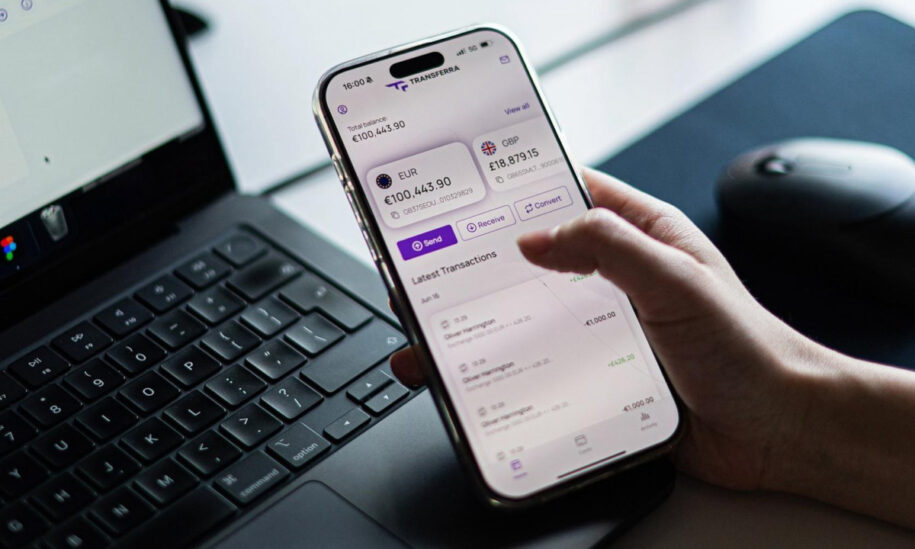
Transferra today published an industry report examining banking continuity risks in the iGaming sector, featuring operational insights from six business development managers on how payment account closures unfold and how operators can protect their business.
An iGaming operator needs two things to trade. A gaming licence, and a payment account to hold and move money. Without the first you cannot legally take a bet. Without the second you cannot pay a game provider, an affiliate, a regulator or a player. The business stops either way.
Only one of the two is taken away by procedure. A regulator moving against a licence gives notice, written reasons, a right to respond and usually an appeal, on a timeline measured in months. A payment provider, historically, sent a letter.
This spring that changed, in part. Since 28 April 2026, a UK payment provider ending an open-ended contract signed on or after that date must give 90 days’ notice and reasons specific enough for the customer to understand the decision. It is the closest an account closure has come to due process. Whether it covers a given operator’s account depends on three things most operators have not checked.
Six business development managers at Transferra, a UK-authorised electronic money institution, spend their weeks in onboarding conversations with operators, suppliers and affiliates. Below, they describe what an account closure looks like from the provider’s side of the table.
The Ripple Effects of a Payment Account Closure
A closure does not stay in finance. Veronika Istomina describes a sequence operators recognise immediately:
“The letter arrives, and within days finance finds part of the balance held pending reconciliation, with no date attached. Then a content provider invoice goes unpaid. Suspension is written into the supplier contract and it gets applied, and the games that disappear first are the ones players came for. The affiliate run is late next. Affiliates don’t send reminders, they move traffic, and traffic doesn’t come back the following month just because the payment eventually cleared. Then withdrawals slow, and that part is public within hours. The whole chain takes about two weeks.”
A notice period, whether thirty days or ninety, is not time to find a new provider. Onboarding a licensed group with entities in several jurisdictions takes weeks at best, and the clock on the old account keeps running while the new provider asks its questions. The notice period is time to have already had one.
Examining the Causes of Declines and De-Banking in the iGaming Sector
Operators treat refusal at onboarding and closure two years later as separate problems. Maksim Kirilov sees them as one:
“Most operators I speak to have been declined somewhere without ever talking to a person. A licence jurisdiction on a list, four entities where the model expects one, a shareholder resident somewhere the screening tool weighs heavily. The same screening keeps running after the account is open, and an exit is what it looks like when it fires two years in. Volume moves outside a modelled band, a new corridor appears in the flow, or nothing happens on the operator’s side at all: an upstream partner tightens its appetite for the category, and everyone in it goes at once.”
That last case is why “what did we do wrong?” so often has no answer. De-risking is frequently a portfolio decision rather than an account decision. A letter explaining a portfolio decision, however detailed, gives an operator nothing to fix.
A Complicated Group Structure is Usually the Compliant One
Vyacheslav Butenko on why the groups that look hardest to onboard are often the most regulated:
“In this industry a structure looks the way it does because the rules asked for it. An entity exists because a regulator required local presence. A second licence exists because a market demanded one. Revenue sits apart from the IP because a tax authority expects it to. Operators get marked down at onboarding for doing what they were told, by a process that never asked why.”
None of this argues against declining. Some applications should be declined, and quickly. The narrower point is that a decision is only as good as the questions that came before it, and the questions are not hard. Where does the money come from? Who are the counterparties? Which entity holds which licence, for which markets? What is the flow of funds from deposit to payout? Who are the beneficial owners, and what else do they own? A group that answers those cleanly is not risky because it has four layers. A group that cannot answer them is risky at any size.
A Backup Payment Account with No Flow is Not an Backup
The standard advice after a closure scare is to open a second provider. Andrejs Marusins thinks the advice stops halfway:
“A backup account that has sat empty for a year is a new customer on the day you need it. Its monitoring has been calibrated on nothing. Then the operator moves the entire payout book onto it in a week, which is precisely the pattern transaction monitoring exists to question. If a second account is going to hold, it has to carry real flow all year: a share of supplier payments, one currency, one market. Then its profile already looks like your business when the rest arrives.”
There is an industry-level version of the same problem. When operators concentrate flows on the few providers that engaged with them, a whole segment’s banking ends up sitting with a handful of desks. One policy change upstream, and a cohort receives the same letter in the same quarter. This tends to be discussed at conferences as a compliance topic. It is a resilience topic.
iGaming Runs on a Calendar the Payment Rails Don’t Share
Angelina Mumgaude works mostly on the part of the relationship that starts after the account is open:
“iGaming is busiest when payment infrastructure is quietest. T2, which settles high-value euro payments, is closed at weekends and on six public holidays, including Good Friday, Easter Monday and 26 December. Dollar payments follow the US holiday calendar whether or not you do any business in the US. And since October 2025, euro transfers go through a payee name check, so every mismatch in a few-hundred-line affiliate run becomes a decision. None of that is a crisis. All of it resolves in minutes with someone who knows the account, and in days with a ticket queue.”
The link to everything above is that person. Whoever can clear a name mismatch on a Friday afternoon is also whoever can explain to their own compliance team why a new corridor appeared in the flow, before anyone reaches a conclusion about it.
Read the Termination Clause Before the Pricing
Ivan Zubarev on the contract itself: “The termination section deserves more attention than the pricing schedule and gets a fraction of it. Notice period, whether it’s symmetrical, what happens to funds held at termination, how long reconciliation is allowed to run. The other thing fully in the operator’s control is sequence. New licence, new entity, new market: tell the provider before the flows show it. A change the provider learns about from its own monitoring is an alert. The same change from the client is an update.”
Which brings back the April rules and the three things they depend on. The provider has to be UK-authorised; providers authorised in the EU still work under the Payment Services Directive, with two months’ notice as the default and no equivalent duty to explain. The contract has to have been signed on or after 28 April 2026; older contracts stay on the previous two-month rule. And the terms matter. UK regulations have long allowed businesses that are not micro-enterprises or charities to agree that the part of the Payment Services Regulations containing these rules does not apply to them, and that clause is common in business terms. How the new protections interact with it is a question for your lawyer. It is worth asking before relying on them.
Start by Identifying the Account Owner
Operators spend real money keeping the licence in good standing. There is a compliance function, external counsel, an audit cycle, a renewal date in the calendar and a named person whose job it is. Nobody would run a licensed business any other way.
Ask the same questions about the payment account and the answers usually run out. No owner, no review date, no contingency, and a contract nobody has reread since it was signed, often by whoever had time that week, when the company was smaller and the structure simpler.
The provider side will change slowly, and the April rules are a start rather than an answer. Deciding who in the business is responsible for the account is something an operator can do this week.
About Transferra
Transferra provides payment accounts to businesses that don’t fit one country. It is built on British financial infrastructure and governed by English law, which answers the two questions an operator has about any provider: whether the money arrives, and what the mechanism is when something goes wrong. Payments run over multiple correspondent routes rather than a single one, so one disruption upstream does not stop an international business.